Water Waste Water and Water Pollution Sewage Household Sewage

| You are viewing text created during the EU sponsored project "Kids & Science". More information on this project can be found on the project Web site: www.kidsandscience.org |
| Kids&Science Water Waste Water and Water Pollution Sewage Household Sewage |
|
| See also: Industrial Sewage, Sewage Treatment Plants, Wastewater Treatment | |
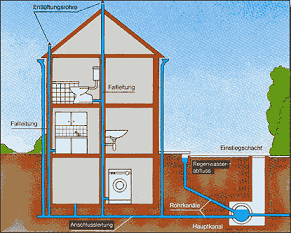
Household Sewage
When we brush our teeth, the dirty toothpaste water flows through the drain into the sewage treatment plant. There, the water is purified so that it can be reintroduced into the water cycle. Hazardous substances like the following must not get into the drain
When we use our drain as a garbage bin, it is very difficult to remove these substances from the water again. Medicines and remnants of paint belong to the hazardous waste. Food remains and garbage block the sewer system and belong in the garbage bin. Being economical with water and using detergents sparingly can reduce the enormous amounts of household sewage. A person who saves drinking water generates less wastewater and protects a large amount of water.
A Few Tips On How to Save Water:
|
| Material courtesy of Kids&Science Foundation |
Web space and technical support provided by Epina GmbH |
Last Update: 2004-Feb-29 |